

Cartersville Landscape Services
Sign up now for autumn service and enjoy a vibrant, worry-free yard all season long!
Get a Free QuoteLandscape Services Tailored for Cartersville, Georgia
Expert Lawn Care for Cartersville’s Unique Environment
Cartersville’s rolling hills, mature tree canopies, and proximity to the Etowah River create a distinctive set of lawn care challenges for local homeowners. In neighborhoods like Waterford and along the banks of Dellinger Park, shaded lots often struggle with patchy grass and moss, while sloped yards in areas such as Mission Estates are prone to soil erosion after heavy spring rains. Summer droughts can stress turf, especially in open spaces exposed to the Georgia sun, and winter road treatments may introduce salt that affects curbside plantings. Our services are designed to address these specific needs, ensuring your landscape thrives year-round. For more information about local parks and community resources, visit the official Cartersville website.
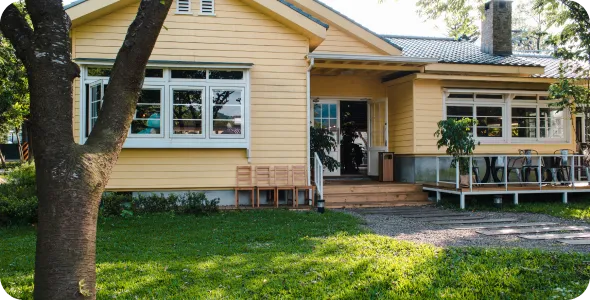
Our Cartersville Landscaping & Yard Care Services
Cartersville Gardening Services
Cartersville Yard Clean Up
Why Choose Cartersville Landscape Services
Cartersville Homeowners Trust Us

Expert Lawn Maintenance
-
Reliable Scheduling
-
Competitive Pricing
-
Professional Team
-
Satisfaction Guarantee
-
Personalized Service
-
Locally Owned and Operated
Contact Your Local Cartersville Public Works or Solid Waste Department for Green Waste Info
Cartersville residents benefit from the city's structured yard waste collection program. Green debris—including grass clippings, leaves, branches, hedge trimmings, and pine straw—is collected on a regular schedule alongside residential solid waste service. Branches must be cut to manageable lengths (typically four feet or shorter) and bundled or placed curbside without plastic bags, as plastic contamination is prohibited in organic waste streams. The city operates a convenience center where residents can drop off brush and yard debris; proof of residency may be required, and commercial landscapers must use separate approved disposal facilities. Storm debris collection is coordinated after major weather events. Blowing or dumping clippings, leaves, sediment, or fertilizer granules into streets, gutters, storm drains, or streams is strictly prohibited under local stormwater rules and the Clean Water Act. Grasscycling—leaving finely cut clippings on the lawn—reduces waste volume and returns nutrients to the soil.
Cartersville Public Works Department
10 North Public Square, Cartersville, GA 30120
Phone: (770) 387-4600
Official Website: Cartersville Public Works Department
Lawn Care Regulations & Permits in Cartersville, GA
Professional lawn care operators in Cartersville must comply with both state and local regulatory frameworks. The Georgia Pesticide Use and Application Act of 1976 and the Georgia Pesticide Control Act of 1976 require commercial applicators to hold valid licenses, verifiable through Georgia Department of Agriculture - Search for Pesticide Applicators. Fertilizer products are regulated at the state level under the Georgia Fertilizer Act of 1997, though local stormwater ordinances influence application timing and runoff prevention. Outdoor watering in Cartersville follows statewide conservation rules outlined by Georgia Water Conservation, including time-of-day restrictions and drought-stage protocols coordinated with Cartersville's water utility. Noise ordinances limit equipment operation hours in residential areas, particularly on weekends and holidays. Commercial operators must maintain a valid occupation tax certificate with the City of Cartersville, carry liability insurance, and ensure vehicle and trailer compliance.
Georgia Department of Agriculture
19 Martin Luther King Jr. Drive SW, Atlanta, GA 30334
Phone: (404) 656-3600
Official Website: Georgia Department of Agriculture
Cartersville Development Services
10 North Public Square, Cartersville, GA 30120
Phone: (770) 387-4600
Official Website: Cartersville Development Services
What Neighborhoods Do We Serve in Cartersville, GA?
Cartersville sits in Bartow County within the North Georgia foothills—a transition zone where Piedmont red clay meets rocky clay-loam hillside soils. Each neighborhood presents distinct lawn care challenges shaped by elevation, slope, canopy, and development era.
- Downtown Cartersville / Historic District — Mature hardwood canopy creates heavy shade on compact lots with aging clay soils. Tall fescue dominates but struggles with summer decline. Historic-district standards may limit landscape modifications.
- The Waterford / Planters Walk — Established subdivisions with HOA-governed aesthetics, compacted builder-grade fill over native clay, and bermudagrass or zoysiagrass in sunnier yards. Stormwater ponds and drainage easements require buffer-sensitive maintenance.
- Kingston Highway Corridor / West Cartersville — Mixed-age properties on sloped terrain with rocky clay-loam soils prone to erosion and washout during heavy rain. Pine and hardwood shade creates thin turf and moss in damp areas.
- Deerfield / Peeples Valley — Newer residential developments with graded lots, disturbed soil profiles, and young tree canopy. Bermudagrass performs well in full sun, but compaction from construction requires aggressive aeration programs.
- Cassville Road / North Cartersville — Larger rural-edge lots with wooded borders, steep grades, and shallow hillside soils. Tall fescue is common but vulnerable to summer heat stress and tree-root competition.
- LakePoint / Highway 20 Corridor — Commercial-adjacent residential areas near LakePoint Sporting Community with higher traffic, stormwater infrastructure sensitivity, and proximity to Etowah River watershed features.
- Summer Hill / South Cartersville — Established neighborhoods with mature canopy, older infrastructure, and mixed turf stands requiring shade-tolerant species selection and drainage improvement on clay soils.
Partnering With Cartersville's Stormwater, Environmental, or Sustainability Office
Cartersville's stormwater management program operates under MS4 (Municipal Separate Storm Sewer System) permit requirements, aligning with Georgia EPD - Municipal Stormwater and Georgia EPD - Stormwater regulations. The Etowah River watershed is the primary receiving water body, making nutrient and sediment runoff prevention critical. Sustainable lawn care practices that support stormwater quality include:
- Proper mulching around beds and tree rings to reduce bare-soil erosion
- Grasscycling to minimize waste and return organic matter to foothill clay soils
- Compost topdressing to improve infiltration on compacted clay
- Rain garden installation in low spots to capture slope runoff
- Native plant integration along creek buffers and drainage swales
- Erosion-aware planting on hillside grades common throughout North Georgia
Coordination with the Georgia Soil and Water Conservation Commission - Urban Erosion & Sediment Control ensures land-disturbing activities meet state standards. Cartersville's Tree City USA recognition underscores the community's commitment to urban canopy preservation.
Georgia Environmental Protection Division
2 Martin Luther King Jr. Drive SE, Suite 1456 East, Atlanta, GA 30334
Phone: (404) 656-4713
Official Website: Georgia Environmental Protection Division
Cartersville Water Department
100 Felton Place, Cartersville, GA 30120
Phone: (770) 387-4650
Official Website: Cartersville Water Department
Top Cartersville Lawn Problems (and How We Solve Them)
Cartersville's North Georgia foothill location creates a specific set of turf challenges driven by rocky clay-loam soils, elevation-related temperature swings, and heavy hardwood shade:
- Clay compaction and poor infiltration — Heavy foot traffic and construction grading compact native clay, reducing root depth and water penetration. Core aeration in fall (for fescue) or late spring (for bermudagrass) restores soil structure. Soil testing through UGA Lawn Care & Landscaping guides amendment rates.
- Tall fescue summer decline — Fescue is widely planted in Cartersville's shaded foothill lots but suffers during July and August heat. Raising mowing height to 3.5–4 inches, irrigating deeply but infrequently, and overseeding each fall with improved cultivars sustains stand density.
- Erosion and slope washout — Graded hillside lots and drainage concentration channels lose topsoil during intense thunderstorms. Erosion blankets, terraced plantings, and ground-cover establishment stabilize vulnerable grades.
- Brown patch in fescue — Warm, humid nights in late spring and early fall trigger Rhizoctonia outbreaks. Reducing nitrogen inputs before stress periods and improving air circulation through selective pruning limits disease severity.
- Shade thinning and moss encroachment — Dense hardwood and pine canopy reduces light below turf survival thresholds. Selective limb removal, shade-tolerant fescue blends, and moss management through pH correction and drainage improvement address chronic thin areas.
- Armyworm and sod webworm damage — Late-summer caterpillar feeding can devastate bermudagrass and fescue stands rapidly. Monitoring per UGA Turfgrass guidelines and timely biological or targeted chemical intervention prevents widespread loss.
- Spring dead spot in bermudagrass — Cooler North Georgia winters increase cold-injury risk in bermudagrass, creating circular dead patches each spring. Proper fall potassium applications and reduced late-season nitrogen help harden turf for winter.
What Makes Lawns in Cartersville Different From the Rest of Georgia?
Cartersville occupies USDA Hardiness Zone 7b/8a at the southern edge of the North Georgia foothills, where the Ridge and Valley physiographic province meets the upper Piedmont. This transition creates lawn conditions distinct from both Metro Atlanta suburbs and South Georgia landscapes:
- Cooler winters with more frost events than Middle or South Georgia, extending bermudagrass dormancy and increasing freeze-stress risk
- Rocky clay-loam soils with shallow bedrock on hillsides, unlike the deep red clay of inner Piedmont suburbs or the sandy Coastal Plain soils farther south
- Steeper residential grades that concentrate runoff and create erosion channels uncommon in flatter Georgia regions
- Heavier hardwood and pine canopy producing dense shade, leaf litter, and tree-root competition that limits turf options
- A longer viable season for tall fescue compared with warmer Georgia zones, though summer decline remains a persistent challenge
- Etowah River watershed sensitivity requiring careful nutrient and sediment management distinct from Chattahoochee or coastal marsh contexts
- A growing season of approximately 210–220 days, shorter than South Georgia's 260+ days, affecting fertilization windows and overseeding timing
UGA Bartow County Extension Office
320 West Cherokee Avenue, Cartersville, GA 30120
Phone: (770) 387-5142
Official Website: UGA Bartow County Extension
Supporting Local Events in Cartersville With Lawn Expertise
Professional lawn care supports Cartersville's vibrant community calendar through turf preparation and maintenance for public spaces:
- Athletic field conditioning for youth sports leagues at Dellinger Park and Sam Smith Park
- Lawn preparation for downtown festivals, including the Cartersville Downtown Summer Concert Series and seasonal events along Main Street
- Grounds support for school campuses within the Cartersville City Schools district
- Park turf recovery after high-traffic community gatherings at Friendship Plaza and Aubrey Street Park
- Greenway and trail-corridor mowing along the Etowah River corridor
- Storm cleanup coordination after severe thunderstorms, including fallen limb removal, slope washout repair, and debris clearing
- Support for neighborhood association beautification projects and HOA common-area maintenance
Cartersville Parks & Recreation Department
100 Felton Place, Cartersville, GA 30120
Phone: (770) 387-5626
Official Website: Cartersville Parks & Recreation
Eco-Friendly Landscaping Backed by Cartersville's Water-Saving and Green Initiatives
Sustainable lawn management in Cartersville aligns with municipal water conservation goals and Etowah River watershed protection. Key practices include:
- Water conservation: Smart irrigation controllers, watering only during permitted hours per Georgia Water Conservation guidelines, zone calibration to match slope and soil type, and drought-tolerant turf species selection for foothill conditions
- Reduced-chemical approaches: Compost topdressing to build organic matter in clay soils, integrated pest management following UGA Turfgrass protocols, properly timed fertilizer applications to minimize runoff, and pollinator-friendly bed plantings using native species per UGA Invasive Species guidance
- Carbon footprint reduction: Battery-powered mowers and blowers, route efficiency to reduce vehicle idling, local mulch reuse from city brush-chipping programs, and grasscycling to eliminate unnecessary green waste hauling
National Weather Service - Peachtree City Office
4 Falcon Drive, Peachtree City, GA 30269
Phone: (770) 486-1133
Official Website: National Weather Service Offices
U.S. Environmental Protection Agency, Region 4
61 Forsyth Street SW, Atlanta, GA 30303
Phone: (404) 562-9900
Official Website: U.S. EPA Region 4
Proudly Serving These Streets and Areas in Cartersville
Our service coverage spans the full Cartersville community, organized by geographic area:
Downtown / Central Cartersville:
- Main Street, Cherokee Avenue, Bartow Street, Church Street, Gilmer Street, Leake Street, Porter Street, Museum Drive, Friendship Plaza area
North Cartersville:
- Cassville Road, Peeples Valley Road, Grassdale Road, Sugar Valley Road, Deerfield subdivision, Mission Road corridor, Pine Grove area
South Cartersville:
- Old Mill Road, Summer Hill Drive, Etowah Drive, South Erwin Street, Old Allatoona Road, Aubrey Street area
East Cartersville:
- Highway 20 / Cherokee Place corridor, LakePoint Parkway, Joe Frank Harris Parkway, Waterford subdivision, Planters Walk
West Cartersville:
- Kingston Highway (US 41), West Avenue, Stiles Avenue, West Main Street, Old Grassdale Road area
Notable Landmarks & Special Consideration Areas:
- Dellinger Park, Sam Smith Park, Etowah Indian Mounds, Booth Western Art Museum, Tellus Science Museum, Cartersville Primary/Elementary/Middle/High School campuses, Pine Mountain area, Etowah River corridor (stream buffer rules apply), stormwater detention areas in newer subdivisions (HOA landscape standards enforced)
Georgia Soil and Water Conservation Commission
4310 Lexington Road, Athens, GA 30605
Phone: (706) 552-4470
Official Website: Georgia Soil and Water Conservation Commission